
Deep Cleaning vs Regular Cleaning: What’s the Difference?
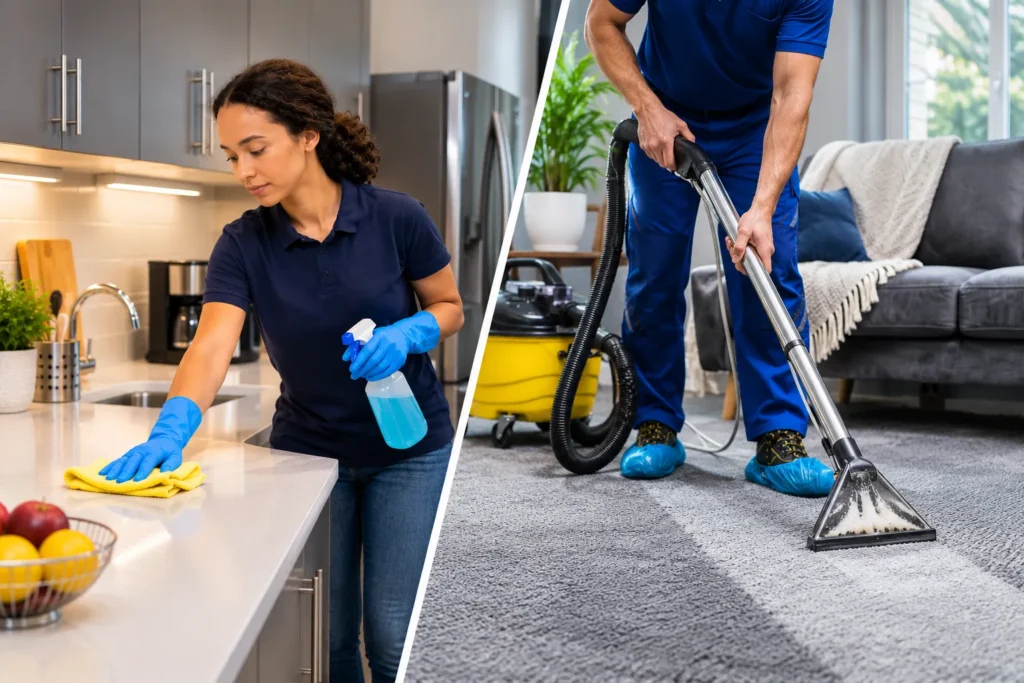
Homes and workplaces collect dust and dirt through daily use. Regular cleaning keeps the main areas neat, but some marks and dirt need more time and care. That is where the choice between deep cleaning vs regular cleaning matters. A regular clean deals with daily mess. A deep clean gives extra care to areas that are not part of each routine visit. The right approach depends on the size of the space, how often people use it and its condition. Choosing The Right Cleaning Plan For Your Space Some tasks are part of a regular cleaning visit, while others need more time and care. Below, we look at what each type of clean can cover, from everyday tasks to detailed work on areas that often get missed. What is Regular Cleaning? Regular cleaning covers the tasks that keep a space in good order. At home, this may include: In an office, the list may also include desks, meeting rooms, staff kitchens, washrooms and reception areas. The task list should match the site. What is Deep Cleaning? Deep cleaning takes more time and looks beyond the main surfaces. It may cover marks on skirting boards, dust on vents, dirt in corners and grime around fittings. It can help after a move, building work or a long period without a full clean. Set out the work before the visit, so everyone knows which rooms and tasks are included. What Do Deep Cleaning Services Cover? The work will vary by property. Titan Apex’s deep cleaning services include detailed surface cleaning, carpet and upholstery care, high-level dusting and sanitisation. Its service page also explains that plans can be tailored to the site. This may include high fixtures, vents, corners, carpets or soft furnishings. Agree on the task list before work starts, as not every plan includes the same items. Key Differences Between Regular Cleaning and Deep Cleaning The table below shows how the two types of cleaning often compare. The work can change based on the size, use and state of the property. Area Regular cleaning Deep cleaning Main aim Keep the space tidy Clean areas that need extra care Visit pattern Often daily or weekly Booked when needed Areas covered Main rooms and used surfaces Main areas plus hard-to-reach spots Tasks Dusting, vacuuming, mopping and wiping Detailed surface, fixture and fabric care Time needed Often less time Usually more time Best use Day-to-day care Built-up dirt or a one-off need Which Cleaning Is Better For Your Home Comparing deep cleaning vs regular cleaning at home, regular cleaning is better for daily use. The routine depends on how many people live there, whether there are pets and which rooms get the most use. When Is Regular Cleaning Enough For Your Home? A weekly routine may cover dusting, floor care, kitchen surfaces, sinks, toilets and bins. Busy homes may need some jobs done more often. Kitchens and bathrooms often need extra checks because they are used throughout the day. When Does Your Home Need A Deep Clean? A deeper clean may help when dirt has built up, or a space needs a fresh start. Common times include: The task list should match the home. One property may need more care for carpets, while another may need extra work in the kitchen or bathroom. In An Office, Which Cleaning Works Best? Offices have different needs from homes. Staff and visitors use shared rooms throughout the day, so a clear routine helps keep them in good order. Why Do Offices Need Regular Cleaning? Planned visits can cover desks, floors, bins, washrooms, kitchens and shared rooms. Meeting rooms may need attention after use. Staff kitchens may need more than one check a day. The plan should show which jobs are done at each visit and who is responsible. For more advice, read our guide to common office cleaning mistakes. When Should An Office Arrange A Deep Clean? An office may need a deeper clean after a move, refit or building work. It can also help when carpets, upholstery, vents or high fixtures need more care than the usual routine allows. Dust may gather above cabinets or around vents. Dirt can sit in carpet fibres and along floor edges. A planned deep clean gives these areas more time and attention. What Does Commercial Cleaning Involve? This work can cover offices, shops, schools and shared buildings. A small office may need a short daily visit, while a busy shop may need more frequent care. A commercial cleaning plan should match the work done on site, the number of people who use it and the rooms that need attention. It may cover floors, desks, washrooms, kitchens, entrances and shared areas. Agree on the work and visit times before it starts. There are also legal duties to keep workplaces clean. In Great Britain, Regulation 9 of the Workplace (Health, Safety and Welfare) Regulations 1992 says workplaces, furniture and fittings must be kept sufficiently clean. It also says waste should not build up where this can reasonably be prevented. The work needed will depend on the premises and how they are used. How Often Should You Arrange Each Type of Clean? There is no fixed schedule. Timing depends on how many people use the space and how fast dirt builds up. How Often Should Regular Cleaning Take Place? A home may need a weekly routine. Offices often need daily or several-times-a-week visits, based on staff numbers and footfall. Kitchens, washrooms and entrances may need more checks than rooms used now and then. Review the plan when use of the space changes. How Often Is Deep Cleaning Needed? Arrange a deeper clean when the usual routine no longer covers the work needed. This may be after a move, renovation or event, or when dirt builds up in areas that are not part of each visit. Check the state of the space before setting a date. Deep Cleaning vs Regular Cleaning: How To Choose The Right Plan For Your Home Or Workplace Look at
10 Common Office Cleaning Mistakes Businesses Should Avoid
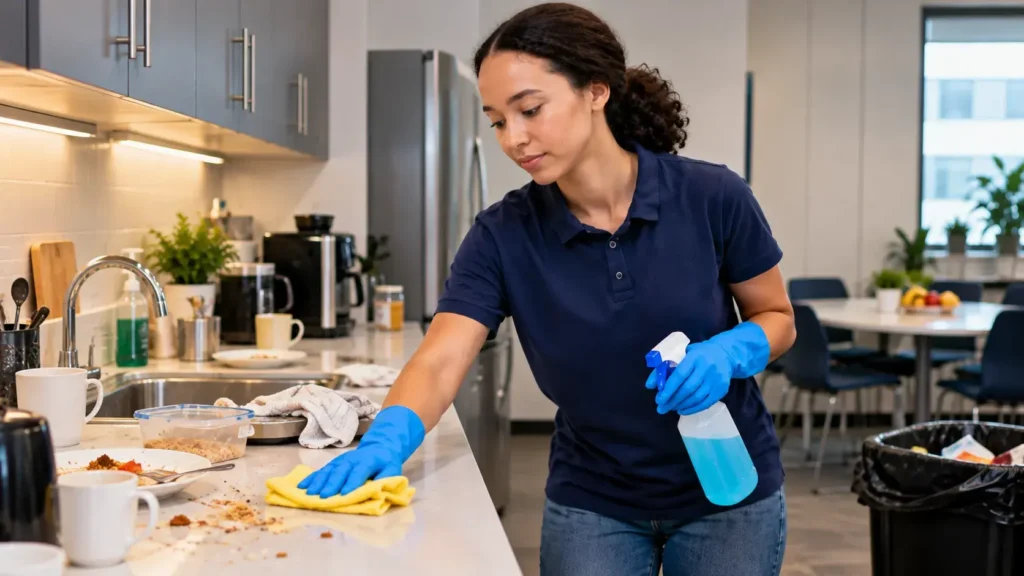
The most common office cleaning mistakes are missed touchpoints, wrong cleaning products, dirty shared kitchens, full bins, poor floor care and no clear task list. Most can be avoided with a simple plan. Staff need to know what to clean, when to do it and who checks the work. A clean office takes more than a quick wipe of desks. Small jobs matter, too. Dust can build up under shelves. Food can stay on a shared table. Marks may sit on glass doors for days. When comparing commercial cleaning UK providers, ask what each visit covers. A clear list helps you see what is included and what may need extra care. Office Cleaning Mistakes Businesses Should Avoid 1. Missing High-Touch Spots Door handles, light switches, lift buttons and shared phones get used all day. These spots are easy to miss when staff focus on desks and floors. Add them to the daily task list. Use a cleaner that suits each surface. Follow the product label and let the area dry as advised. Meeting rooms need care, too. Many people may use the same table, chair arms and door handles in one day. A quick check after use can help keep these spaces in good order. 2. Using the Same Cloth in Every Room A cloth used on a desk should not then wipe a kitchen worktop or washroom sink. It can carry dirt from one area to another. Keep separate clothes for desks, kitchens and washrooms. A colour code can help staff know which cloth to use. Wash or replace each cloth when needed. The same care applies to mops and buckets. Clean tools after use and store them in the right place. Dirty tools cannot do a good job, even when staff spend time cleaning. 3. Choosing the Wrong Cleaning Product A product that works on glass may not suit wood or a computer screen. The wrong cleaner can leave marks or damage the surface. Read the label before use. Also check the maker’s care guide for the item. Never mix cleaning products, as this can cause harm. Keep all bottles labelled and store them away from food. Staff should know how much product to use and when to use it. More cleaner does not always mean a better result. Too much can leave a film or make a floor slippery. 4. Leaving Shared Kitchens Dirty Staff kitchens can get messy in a short time. Crumbs may fall on tables. Tea and coffee can leave marks. Food may stay in the fridge for too long. Clean sinks, worktops, tables and appliance handles as part of the set plan. Empty food waste and check the floor for spills. Clean up marks before they dry. Staff also need to play their part. Ask them to wash or put away their cups and clear food after use. This keeps the space ready for the next person and makes the cleaner’s job easier. 5. Letting Bins Fill Up A full bin can cause smells and leave a poor view of the office. Food waste may also attract pests if it is left too long. Set bin checks based on how each room is used. A busy kitchen may need more checks than a small meeting room. Replace liners and clean the bin if waste leaks out. Recycling needs a clear plan as well. The guide to workplace recycling in England explains how workplaces must sort dry recycling, food waste and general waste, with some rules varying by business size. Place clear labels on bins. Make sure staff know what goes in each one. This helps reduce waste that is put in the wrong bin and makes the area easier to manage. 6. Rushing Floor Care Floors collect dust, grit and marks from shoes. Dirt often sits by doors, under desks and along the edges of a room. A quick pass may leave these spots behind. Use the right method for each floor. Vacuum carpets and mop hard floors with suitable tools. Give extra care to entrances and busy walkways. Spills need quick care too. Blot a carpet stain rather than rubbing it into the fibres. Our guide to office carpet stain removal explains how to deal with common marks. Take care after mopping. Keep people away from wet floors until they are safe to use. This helps prevent slips and falls. 7. Forgetting Washroom Checks A washroom may look clean but still have missed tasks. Taps, flush buttons, door handles and soap holders all need care. Soap and paper can also run out between visits. Include toilets, sinks, mirrors, touch points and floors in the cleaning plan. Check supplies during each visit. Staff should have a clear way to report spills or empty dispensers. How often you clean will depend on use. A washroom used by many staff and visitors may need more checks than one in a small office. Set times that suit the space and review them when use changes. 8. Cleaning Office Equipment the Wrong Way Keyboards, printers and screens need care. Spraying liquid straight onto electrical items may cause damage. A rough cloth can leave marks on a screen too. Follow the maker’s cleaning guide. Use a soft cloth and a product that is safe for the item. Do not use too much liquid. Turn the device off first when the maker tells you to do so. Shared phones and keyboards may need a place on the cleaning list. Staff should know which items they can clean and which need special care. Never guess when dealing with costly office equipment. 9. Working Without a Task List If jobs rely on memory, some may be missed. One person may think a meeting room has been cleaned, while another thinks it is not their task. Make a list for each room. Include desks, floors, bins, kitchens and washrooms. Note which tasks need daily care and which can be done each week or month. Give each task a clear owner. A
Office Carpet Stain Removal: A Complete Guide to Stain-Free Carpets
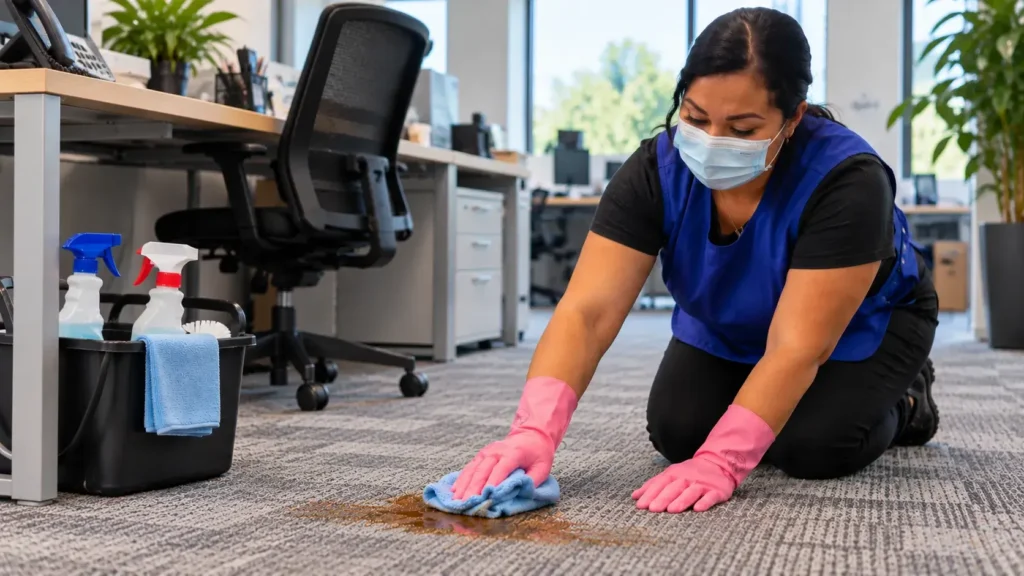
Office carpets see heavy use. Staff walk over them all day. People bring in mud, food crumbs and wet shoes. Coffee and tea can spill near desks. Even a small mark can stand out when the rest of the room is clean. The good news is that you can treat many fresh stains with a few simple steps. The key is to use the right method for the carpet. Too much water or the wrong cleaner can make things worse. This guide looks at common office spills, what you can do about them and when it is best to call a professional. Office Carpet Stain Removal: What to Do First The first few minutes matter after a spill. Act soon, but do not rush to grab the nearest cleaning spray. Start by keeping people away from the wet patch. This helps stop the spill from spreading and lowers the risk of slips. Next, look at what has been spilt. A puddle of water needs different care from a blob of grease or a mark from a pen. Good office carpet stain removal starts with three simple steps: lift loose dirt, soak up extra liquid and check the carpet care guide. These steps can help you avoid making the mark worse. If the spill is large or you do not know what caused it, ask a trained cleaner for advice before using a product. How to Get Stains Out of Carpet: Five Simple Steps If you are unsure how to get stains out of carpet, take your time. A careful clean is better than trying several products in a rush. Step 1: Pick Up Loose Dirt If food has fallen on the carpet, lift the loose pieces first. Use a spoon or a blunt tool if needed. Do not press the food into the carpet. For wet mud, keep people off the spot. Let it dry first if the carpet care guide allows it. You can then lift the loose dirt with care. Step 2: Blot the Spill Take a clean, white cloth or paper towel. Press it gently on the spill to soak up the liquid. Lift the cloth and use a clean part each time. Keep going until little liquid comes away. Do not scrub the spot. Rubbing can push the spill deeper into the carpet. It can also spread the mark to a wider area. Step 3: Check Before Using a Cleaner Look at the carpet care guide. It should help you choose a safe way to clean the stain. The type of spill matters too. A drink, an ink mark and an oily patch need different care. One cleaner may not suit all three. If you cannot tell what caused the stain, do not guess with a strong product. Step 4: Test the Product Choose a cleaner made for the carpet and the stain. Read the label before you use it. Test a small amount on a hidden patch first. Let it dry, then check for any change in colour or feel. If the patch looks fine, follow the label to treat the stain. Use only the amount you need. Dab the spot with a clean cloth and work from the edge towards the centre. Step 5: Let the Carpet Dry Follow the product label to remove any cleaner left on the carpet. Some products need to be wiped away, while others have their own steps. Do not soak the area with water. Too much water may harm some carpets and can take a long time to dry. Keep people away from the wet spot until it is dry. If the spill covers a large area, follow your workplace safety rules. How to Remove Carpet Stains from Common Office Spills The right method depends on what caused the mark. Knowing how to remove carpet stains starts with dealing with each spill in the right way. Coffee and Tea Coffee and tea can leave brown marks, especially on pale carpets. Blot the spill as soon as you can. Use a clean, white cloth to soak up the drink. Press the cloth onto the spill. Do not rub, as this can spread the stain. Once you have soaked up the extra liquid, check whether the carpet care guide allows a suitable cleaner. Wait until the area dries before judging the result. If the mark is still there, avoid adding more product without checking what to do next. Food and Soft Drinks A dropped sandwich or a splash of fizzy drink can leave more than one problem. Food may leave bits behind, while drinks can leave a sticky patch. Lift solid food first. Then soak up any liquid with a clean cloth. Use a carpet-safe cleaner if the care guide permits it. Follow the label and remove any leftover product as directed. Check the spot after it dries. If it still feels sticky, ask a cleaner for advice rather than soaking it again. Mud and Dirt Mud often comes in on shoes. This is why the area near the front door can need more care than a quiet office corner. Keep people away from wet mud so they do not spread it. Let it dry if the carpet care guide says this is safe. Lift the loose dirt, then vacuum the area if the carpet allows it. Treat any mark that remains with a suitable product. If the dirt has been pushed deep into the carpet, a quick surface clean may not be enough. Ink and Toner A leaking pen or spilt toner can be hard to deal with. Rubbing may spread the mark and make the job harder. Do not reach for bleach or a random household solvent. These can harm the carpet or change its colour. Check the care guide before trying a product. For a large ink mark or spilt toner, contact a trained cleaner. This is safer than testing products one after another. Grease and Oily Marks Grease can cling to carpet fibres and leave